2026-10-26 · Robert Vance
Winston-Salem Street Placement Rules for Temporary Dumpsters
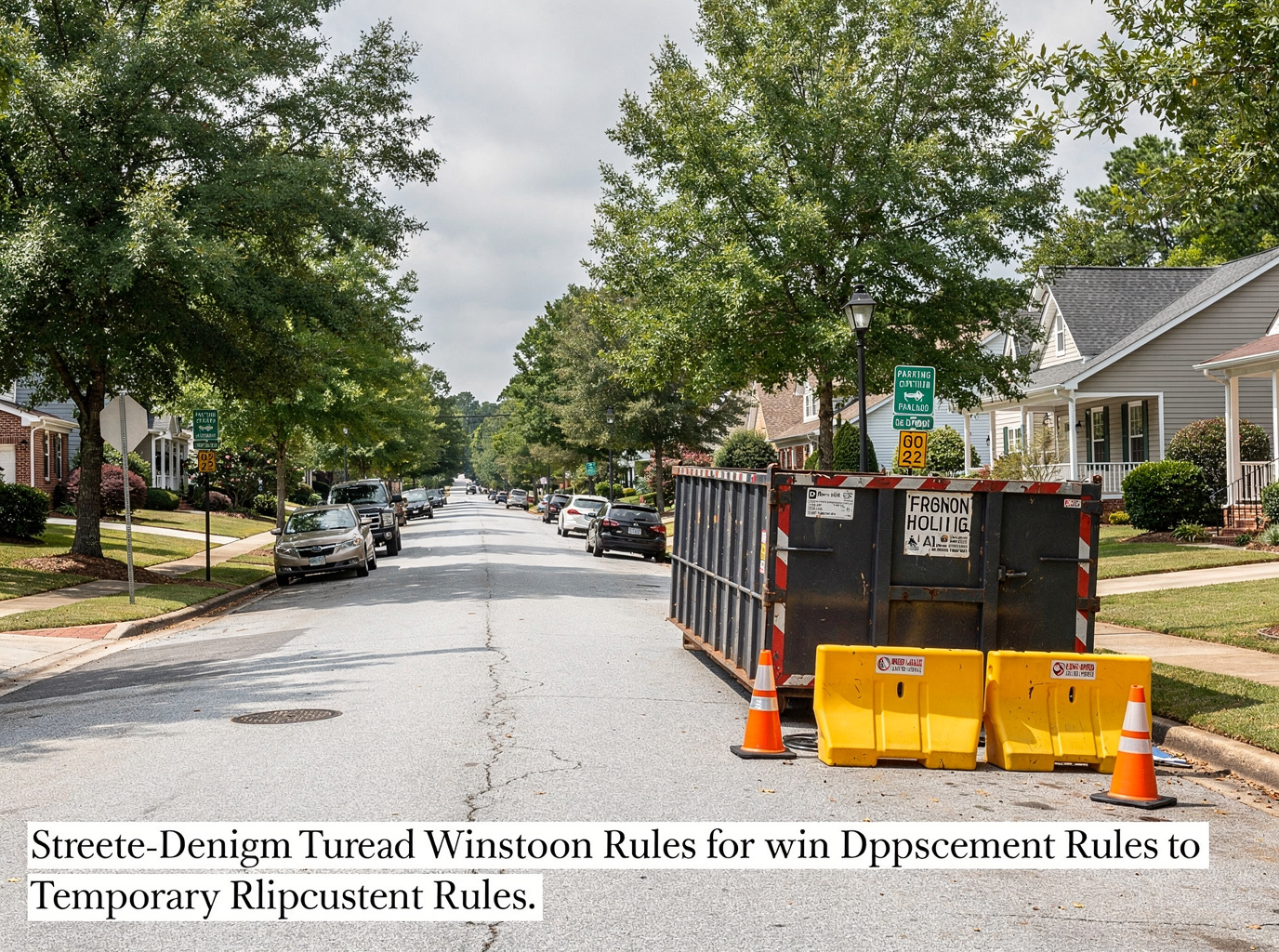
Winston-Salem requires a permit from the city before any temporary dumpster sits on a public street, with placement at least 15 feet from fire hydrants and 20 feet from intersections to maintain clear access for emergency vehicles and regular traffic.
Permit Process for Street Use
Homeowners in Downtown Winston-Salem or the West End often need street placement because driveways are short or occupied by vehicles. The application goes through the city’s transportation department and typically covers the dumpster footprint plus buffer space on either side. Processing takes a few business days, so residents planning renovations in Ardmore or Reynolda should apply early rather than assume same-day approval. Once issued, the permit must stay visible on the unit. Failure to secure one leads to immediate removal orders and added fees from the city. Local operators familiar with Forsyth County routes know which streets trigger extra review because of utility markings or upcoming paving schedules.
Positioning Rules on Local Streets
Dumpsters must sit parallel to the curb with all wheels fully on the pavement and no part extending into the travel lane. In older sections such as Waughtown or Old Salem, streets are narrower, so crews often use smaller 10- or 15-yard containers to stay within the marked space. Reflective cones or barrels are required at both ends during daylight hours and reflective tape plus flashing lights at night. The unit cannot block any sidewalk or crosswalk, and a minimum 5-foot pedestrian path must remain open. On hills common around Truist Stadium, wheel chocks and additional blocking prevent rolling during heavy rain. These steps keep the placement legal and reduce liability for the property owner.
Weather and Terrain Effects in Forsyth County
Winston-Salem’s humid subtropical climate brings frequent summer thunderstorms that turn streets slick and can shift unsecured dumpsters. Mild winters still produce occasional freezes that make asphalt brittle, so crews avoid placing units over recent patches or known soft spots near Winston-Salem State University. In neighborhoods like Ardmore with mature tree cover, falling limbs after storms can damage containers, so placement under low branches is avoided. During leaf season, extra clearance from storm drains prevents debris from clogging gutters when the unit is removed. Operators based at 995 Hutton St monitor these conditions daily and adjust routes accordingly.
Avoiding Violations in Key Neighborhoods
Residents in the West End and Reynolda frequently request residential dumpster rental for kitchen and bath updates, yet narrow rights-of-way force careful planning. Placing a unit too close to a driveway entrance can block neighbor access and draw complaints. Near Old Salem Museums & Gardens, historic district guidelines add review layers that extend permit timelines. Checking for overhead wires before delivery prevents contact with service lines during loading. Linking placement decisions to the overall project scope, such as consulting a Dumpster Sizing Guide for Winston-Salem Home Renovations, helps match container size to street constraints. When projects involve yard waste, the Fall Leaf and Yard Waste Removal Options Around Winston-Salem post outlines seasonal timing that aligns with placement rules.